If you have ever wondered how to reduce eye strain at work, you are not alone. Millions of professionals spend eight or more hours staring at screens every single day, and that constant exposure quietly takes a toll on their vision, focus, and overall productivity. The burning sensation, dry eyes, blurred vision, and nagging headaches that follow a long workday are all classic signs of digital eye fatigue, a condition that is becoming increasingly common in modern workplaces.
The truth is, most people ignore these early warning signs until the discomfort starts interfering with their daily performance. Whether you work from a corporate office or a home desk setup, prolonged screen time without proper habits can lead to serious long-term consequences for your eye health. Understanding how to reduce eye strain at work is no longer optional it is essential for anyone who relies on computers, laptops, or tablets throughout the day.
In this expert guide, we will walk you through proven methods backed by optometrists and workplace wellness research that can help you protect your eyes effectively. You will learn practical tips around the 20-20-20 rule, proper monitor positioning, ideal screen brightness settings, the importance of computer glasses, and how small changes in your workspace ergonomics can make a dramatic difference. We will also cover how blue light exposure, poor lighting conditions, and incorrect posture contribute to eye discomfort and what you can do about each one.
By the end of this article, you will have a clear, actionable plan to reduce eye strain at work and maintain healthier, more comfortable vision throughout your entire workday. Let’s dive in.
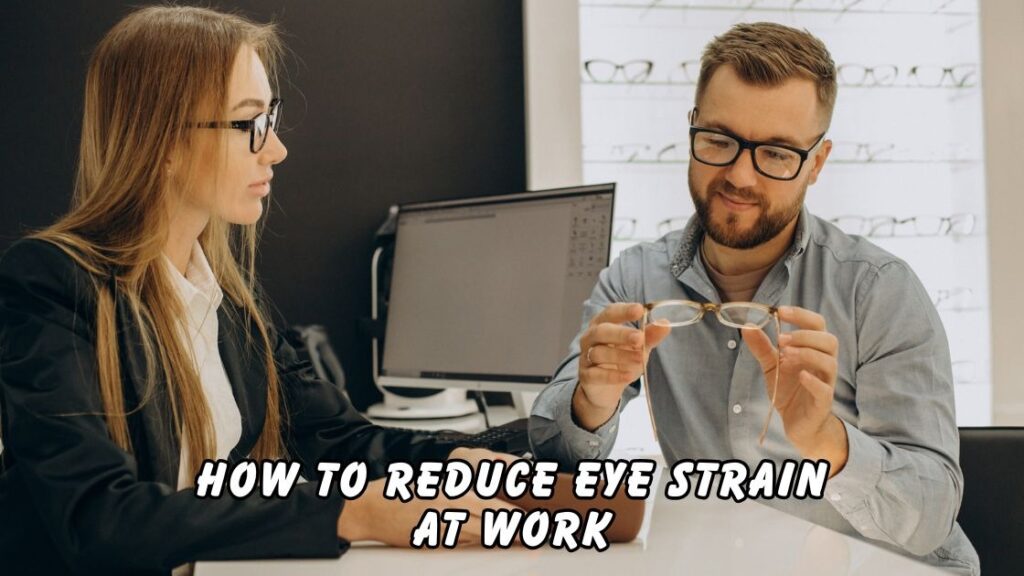
Understanding Digital Eye Strain and Why It Matters
Before learning how to reduce eye strain at work, it is important to understand what digital eye strain actually is. Also known as computer vision syndrome, digital eye strain is a group of eye and vision related problems caused by prolonged use of digital screens. According to vision care professionals, nearly 65% of office workers experience some form of eye discomfort during their workday, making it one of the most widespread occupational health concerns today.
The symptoms include dry eyes, blurred vision, headaches, neck tension, and difficulty focusing on distant objects after extended screen use. These issues arise because our eyes work significantly harder when reading digital content compared to printed material. The glare, flickering pixels, and reduced contrast on screens force the eye muscles to constantly adjust, leading to fatigue over time.
Understanding how to reduce eye strain at work starts with recognizing that this is not just a minor inconvenience. Left unaddressed, chronic eye strain can affect your concentration, sleep quality, and long-term visual health.
How Digital Eye Strain Works
The Role of Blue Light Exposure
One of the primary contributors to screen fatigue is blue light emitted by monitors, laptops, and smartphones. Blue light has a shorter wavelength and higher energy compared to other visible light, which means it scatters more easily and creates visual noise. This forces your eyes to work overtime to maintain focus, and over extended periods, it contributes significantly to digital eye fatigue.
Knowing how to reduce eye strain at work means understanding that filtering or limiting blue light exposure through software tools or specialized lenses can provide meaningful relief during long working hours.
Screen Distance and Viewing Angles
Another critical factor is how close you sit to your screen and the angle at which you view it. When your monitor is too close or positioned incorrectly, your eye muscles remain in a constant state of contraction. Ergonomic experts recommend placing your screen at arm’s length distance, with the top of the monitor slightly below eye level. This simple adjustment plays a key role in learning how to reduce eye strain at work without spending any money.
Proven Methods to Protect Your Eyes at Work
The 20 20 20 Rule
The most widely recommended technique for how to reduce eye strain at work is the 20 20 20 rule. After every 20 minutes of screen time, shift your focus to something 20 feet in the distance and hold your gaze for a minimum of 20 seconds. This brief pause allows your ciliary muscles to relax and reset, reducing cumulative fatigue throughout the day. Optometrists consider this one of the simplest yet most effective habits for maintaining comfortable vision during screen heavy tasks.
Optimizing Your Workspace Lighting
Poor lighting is a silent contributor to eye discomfort. When your workspace is either too bright or too dim compared to your screen, your eyes struggle to adapt, which accelerates strain. Learning how to reduce eye strain at work involves balancing ambient room lighting with your screen brightness so that neither overpowers the other.
Practical Lighting Adjustments
- Position your desk perpendicular to windows to avoid direct glare on your screen.
- Use adjustable task lighting instead of relying solely on harsh overhead fluorescent lights.
- Match your screen brightness to the surrounding environment so the display does not look like a light source.
- Apply an anti glare screen protector to minimize reflections from nearby light sources.
- Use warm toned lighting in your workspace to reduce contrast between your screen and surroundings.
Adjusting Display Settings for Comfort
Your monitor settings play a surprisingly large role in how to reduce eye strain at work effectively. Most people never bother customizing their display beyond the factory defaults, but small changes can bring significant comfort.
Increase the text size to a level where you do not need to lean forward or squint. Adjust the color temperature to warmer tones during evening hours using built in features like Night Shift or third party applications like f.lux. Keeping your screen’s refresh rate at 60Hz or higher also helps reduce subtle flickering that contributes to visual fatigue.
The Importance of Blinking and Eye Hydration
Research shows that people blink up to 66% less frequently when staring at screens. This reduced blink rate leads to dry, irritated eyes, which is one of the most common complaints among office workers. A conscious effort to blink more often is a surprisingly powerful method when figuring out how to reduce eye strain at work naturally.
Keeping lubricating eye drops at your desk and using them periodically throughout the day can also help maintain a healthy tear film and prevent the gritty, burning sensation associated with prolonged screen use.
Essential Tips and Habits for Long Term Eye Health
Mastering how to reduce eye strain at work is not about one single change. It is about building a set of consistent daily habits that collectively protect your vision. Here are the most impactful practices recommended by eye care professionals.
- Take a five minute screen break every hour to let your eyes fully rest and recover.
- Wear computer glasses with blue light filtering lenses if you spend more than six hours on screens daily.
- Keep your monitor clean because dust and fingerprints reduce clarity and force your eyes to work harder.
- Stay hydrated throughout the day since dehydration directly affects tear production and eye moisture.
- Schedule an annual comprehensive eye exam to catch early signs of vision problems before they worsen.

Workspace Ergonomics and Posture
How to reduce eye strain at work is closely connected to your overall posture and workstation setup. When your chair height, desk position, and monitor placement are not aligned properly, you unconsciously adopt awkward viewing angles that increase eye and neck strain simultaneously.
Your chair should allow your feet to rest flat on the floor while your eyes naturally meet the top third of the screen. Investing in an adjustable monitor stand or laptop riser is one of the most practical upgrades you can make for both visual comfort and spinal health.
Choosing the Right Monitor
If you are serious about learning how to reduce eye strain at work for the long term, consider upgrading to a monitor with an IPS panel, flicker free technology, and a built in blue light filter. Larger screens with higher resolution allow you to read comfortably without zooming in, which significantly reduces the effort your eyes need to exert throughout the day.
How to reduce eye strain at work ultimately comes down to awareness and consistency. When you combine proper lighting, ergonomic adjustments, regular breaks, and the right display settings, you create a work environment that supports your eyes instead of working against them.
Conclusion
Taking care of your eyes during long working hours is no longer something you can afford to overlook. Throughout this guide, we have covered the most effective and proven strategies on how to reduce eye strain at work, from understanding the causes of digital eye fatigue to implementing practical solutions that deliver real results.
The key takeaway is that protecting your vision does not require expensive equipment or dramatic lifestyle changes. Simple habits like following the 20 20 20 rule, adjusting your screen brightness, maintaining proper monitor distance, and blinking more consciously can make a tremendous difference in how your eyes feel by the end of each workday. Pairing these habits with better workspace ergonomics, proper lighting, and regular use of lubricating eye drops creates a comprehensive defense against computer vision syndrome.
It is also worth remembering that how to reduce eye strain at work is not a one time fix. It requires ongoing consistency and mindful adjustments as your work environment or screen habits evolve. What works today should become a permanent part of your daily routine to ensure long term visual comfort and overall well being.
If you spend the majority of your day in front of a screen, prioritizing your eye health is one of the smartest investments you can make in your productivity and quality of life. Start applying these proven methods today, and you will quickly notice how to reduce eye strain at work becomes second nature. Your eyes will thank you for it.
Do not wait until the discomfort becomes unbearable. Take the first step now and make how to reduce eye strain at work a priority starting this week. Your future self will appreciate the effort you put in today to safeguard your most valuable sense.