Some living things on this planet were already centuries old when the Egyptian pyramids were first built. Scattered across remote mountain ranges, temperate forests, and wind-battered coastlines, the world’s oldest trees have quietly persisted through ice ages, empires, and climate shifts that reshaped everything around them.
These long-lived organisms are far more than natural curiosities. According to a 2022 review published in Trends in Ecology & Evolution, ancient trees serve as irreplaceable hubs for biodiversity conservation, carbon storage, and ecosystem restoration functions that younger trees simply cannot replicate.
This guide covers which specimens hold the longevity records, the biological mechanisms behind their survival, and why their conservation has become an urgent global priority.
Table of Contents
What Exactly Qualifies as an “Ancient” Tree?
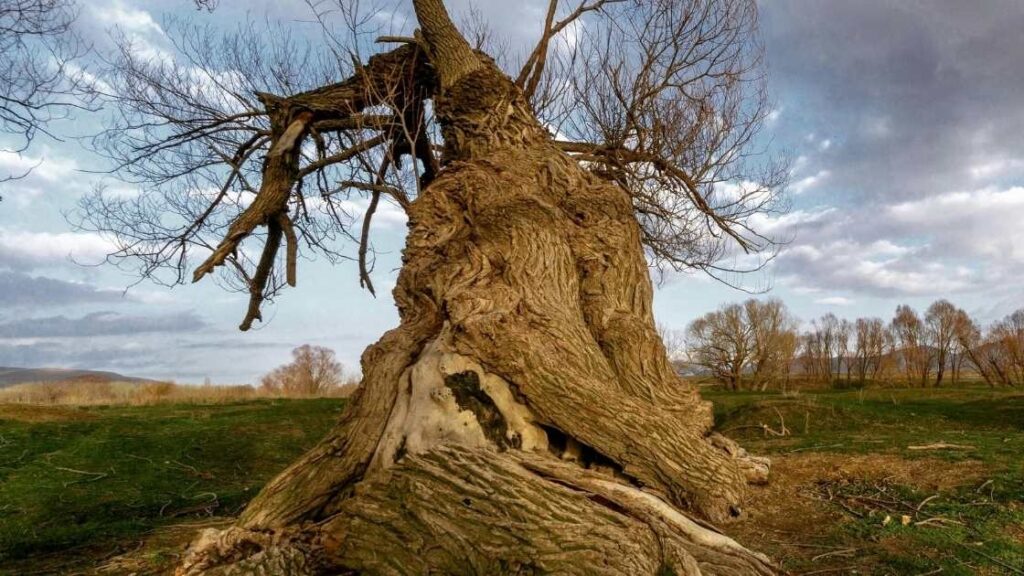
Age alone does not determine whether a tree earns this classification. According to the Woodland Trust, a tree is generally considered ancient when it enters the final third of its expected lifespan and that threshold varies dramatically by species.
A birch, for instance, grows rapidly and may qualify at roughly 150 years. An English oak typically reaches this stage around 400 years. A yew, on the other hand, might not be classified this way until it surpasses 800 years. As the World Economic Forum notes, one yew just outside London is believed to be around 2,500 years old.
Physical characteristics also matter. These veteran specimens often display wide, hollow trunks, reduced crown size, bark fissures, and missing limbs. Rather than signs of decay, these features signal deep ecological value each cavity, crevice, and dead branch creates microhabitats for fungi, insects, birds, and lichens.
The Oldest Known Trees on Earth
Scientists distinguish between two categories: non-clonal trees (single, genetically unique organisms) and clonal trees (colonies sharing one root system that regenerate over millennia). Here are some of the most significant record holders.
| Tree / Colony | Species | Location | Estimated Age | Category |
| Methuselah | Great Basin Bristlecone Pine | California, USA | ~4,856 years | Non-clonal |
| Gran Abuelo (Alerce Milenario) | Patagonian Cypress | Chile | Possibly 5,000+ years | Non-clonal (disputed) |
| Sarv-e Abarqu | Mediterranean Cypress | Abarkooh, Iran | ~4,000–4,500 years | Non-clonal |
| Llangernyw Yew | Common Yew | North Wales, UK | ~4,000–5,000 years | Non-clonal |
| Old Tjikko | Norway Spruce | Fulufjället, Sweden | ~9,550 years | Clonal |
| Pando | Quaking Aspen | Utah, USA | ~16,000–80,000 years | Clonal colony |
Data sourced from the Natural History Museum of Utah, Discover Wildlife, and Leaf & Limb.
Methuselah, growing high in California’s White Mountains, held the individual longevity record for decades. Its precise location remains a closely guarded secret, kept hidden by the U.S. Forest Service to prevent vandalism. Meanwhile, Chilean scientist Jonathan Barichivich has proposed that Gran Abuelo may actually be older, though this claim relies on statistical modeling rather than traditional ring-counting, as reported by Discover Wildlife.
Pando, a colony of over 40,000 genetically identical quaking aspens in Utah’s Fishlake National Forest, operates as a single organism connected by one massive root network. Some researchers estimate its age at up to 80,000 years, potentially making it the oldest living plant on Earth, according to the Natural History Museum of Utah.
Why Do Certain Trees Survive for Thousands of Years?
Extreme longevity is not accidental. A combination of biological adaptations and environmental factors allows these organisms to outlast nearly every other living thing. Research published in PNAS in 2024 confirmed that the physiological traits of extremely old trees are directly linked to their unique ecological roles.
Here are the key survival mechanisms:
- Slow, dense growth Harsh environments force minimal annual growth, producing wood saturated with resin that resists insects, fungi, and rot far better than fast-grown timber.
- Sectored vascular systems Each major branch and root operates somewhat independently, so damage to one section does not kill the entire organism.
- Compartmentalization of decay A process known as CODIT allows trees to wall off damaged or infected tissue, preventing decay from spreading.
- Defensive chemistry Long-lived species synthesize potent antimicrobial and antifungal compounds within their wood and bark.
- Clonal regeneration Species like aspens and certain spruces send up genetically identical shoots from existing root systems, allowing the organism to persist even after individual trunks die.
- Extreme habitat advantage Many of the oldest specimens grow in high-altitude, nutrient-poor environments where competition from other plants is virtually nonexistent.
The Ecological Role These Veteran Organisms Play
Ancient trees are not passive survivors they actively shape the ecosystems around them. A 2022 review in Trends in Ecology & Evolution described them as irreplaceable hubs for biodiversity, carbon sequestration, and mycorrhizal connectivity that younger specimens simply cannot replicate.
A single veteran oak, for example, can support more biodiversity than a thousand younger oaks combined, according to the Woodland Trust. Hollow trunks shelter bats and nesting birds. Bark crevices host rare lichens and beetles. Fallen branches feed decomposer communities that cycle nutrients back into the soil.
Their carbon storage capacity is equally significant. As the One More Tree Foundation explains, removing just one hectare of old-growth forest in British Columbia can release up to 500 tonnes of stored carbon roughly equivalent to over a century of emissions from a typical car.
Research published in PNAS in 2024 further confirmed that the unique physiological traits of extremely old trees drive ecological relationships that are entirely irreplaceable and necessary for healthy ecosystem dynamics.
Major Threats Facing the World’s Oldest Living Trees
Despite surviving millennia of natural hazards, these long-lived organisms now face a convergence of modern dangers that are accelerating their decline at an alarming rate.
According to the World Resources Institute, the tropics lost a record 6.7 million hectares of primary rainforest in 2024 alone the worst year in over two decades. That forest loss released approximately 3.1 gigatonnes of greenhouse gas emissions, as reported by the Forest Stewardship Council.
| Threat | Impact on Old-Growth Specimens |
| Climate change | Intensifies drought, wildfire frequency, and pest outbreaks |
| Deforestation | Permanent land conversion destroys irreplaceable habitats |
| Urban expansion | Fragments remaining old-growth corridors |
| Invasive species | Outcompete native flora and introduce new pathogens |
| Illegal logging | Targets the largest, most valuable timber first |
A World Weather Attribution study from early 2026 documented how climate-fueled wildfires in Patagonia encroached directly on Los Alerces National Park, a UNESCO World Heritage Site that shelters some of Earth’s oldest alerce trees.
Meanwhile, a University of Leeds study cited by the World Economic Forum warns that up to 90% of temperate rainforests in certain regions could vanish by 2100 even under optimistic emissions scenarios.
Conservation Efforts Worth Knowing About
Protecting these millennia-old organisms requires coordinated action at local, national, and global scales. Several promising initiatives are already underway.
The World Economic Forum’s 1t.org initiative aims to conserve, restore, and grow one trillion trees by 2030 through public-private partnerships. Ecologists writing in Trends in Ecology & Evolution have called for a global monitoring platform that combines advanced satellite technology with community science projects to map and protect remaining old-growth forests and ancient trees worldwide.
On the ground, organizations like the Woodland Trust in the UK, the Archangel Ancient Tree Archive in the United States, and the Ancient Tree Forum work to catalog, propagate, and legally protect veteran specimens. Indigenous communities also play an outsized role some estimates suggest they currently safeguard around 80% of the planet’s remaining biodiversity, as noted by Resilience.org.
What You Can Do Personally
You do not need to be a scientist or policymaker to contribute. Report veteran or notable trees in your area to local conservation registries. Support reforestation organizations financially or through volunteer hours. Choose FSC-certified wood products. And advocate for stronger legal protections at the municipal and national level.
Conclusion
The world’s oldest living organisms carry within their rings and roots a biological record stretching back thousands of years. They stabilize ecosystems, store massive quantities of carbon, shelter rare species, and connect us to deep ecological and cultural history. Yet they face unprecedented modern threats from climate change, deforestation, and urban sprawl.
Protecting what remains is not optional it is essential for maintaining planetary health. Every preserved veteran specimen represents centuries of accumulated ecological value that no amount of replanting can quickly restore.
Share this article with someone who cares about the natural world. If you have encountered a remarkable old tree in your region, consider documenting it and reporting it to a local conservation group. Small actions, multiplied across communities, create the political will and public awareness these irreplaceable organisms need to survive another millennium.
What is the oldest tree in the world?
The oldest confirmed individual tree is Methuselah, a Great Basin bristlecone pine in California estimated at roughly 4,856 years old. If clonal organisms are included, Pando a quaking aspen colony in Utah may be between 16,000 and 80,000 years old, potentially making it the oldest living plant on Earth.
How do scientists determine the age of very old trees?
The primary method is dendrochronology, which involves counting annual growth rings from a core sample extracted with an increment borer. For specimens too old or decayed for a complete ring count, researchers use radiocarbon dating and cross-dating techniques that match ring patterns across multiple samples.
Why are old-growth forests important for climate change?
Old-growth forests function as massive carbon sinks, storing carbon accumulated over centuries in their wood, roots, and surrounding soil. When these forests are destroyed, that stored carbon is released into the atmosphere as carbon dioxide, worsening global warming and creating a destructive feedback loop.
Can you visit the world’s oldest trees?
Several famous specimens are accessible to the public. Pando can be visited in Utah’s Fishlake National Forest, and the Ancient Bristlecone Pine Forest in California’s White Mountains is open to hikers. However, the exact locations of the most vulnerable individual trees, including Methuselah, are kept secret for their protection.
What is the biggest threat to veteran trees today?
Climate change is widely considered the most severe long-term threat because it amplifies wildfire intensity, drought duration, pest outbreaks, and disease pressure simultaneously. Deforestation for agriculture and urban development compounds the problem by eliminating irreplaceable habitats permanently.
How can ordinary people help protect old-growth forests?
You can support conservation organizations like the Woodland Trust or the Archangel Ancient Tree Archive, purchase FSC-certified products, document notable trees in your area for local registries, reduce personal carbon emissions, and advocate for stronger environmental protections through local government channels.