Butterfly wings are thin, vein-supported membranes blanketed by hundreds of thousands of microscopic chitin scales that produce color, regulate body heat, repel water, and enable efficient flight. Far from being simple decorative surfaces, these structures rank among the most sophisticated biological engineering feats found anywhere in the animal kingdom.
If you have ever brushed a butterfly and noticed a fine, powdery residue left on your fingertip, you were touching those very scales. Each one grows from a single skin cell, and together they give every species its unique palette of pigments and light-bending optical effects.
This guide walks through exactly what these delicate structures are made of, how they generate color, why their patterns exist, how they fly, what scientists are learning from them, and why the creatures carrying them are disappearing at alarming rates.
Table of Contents
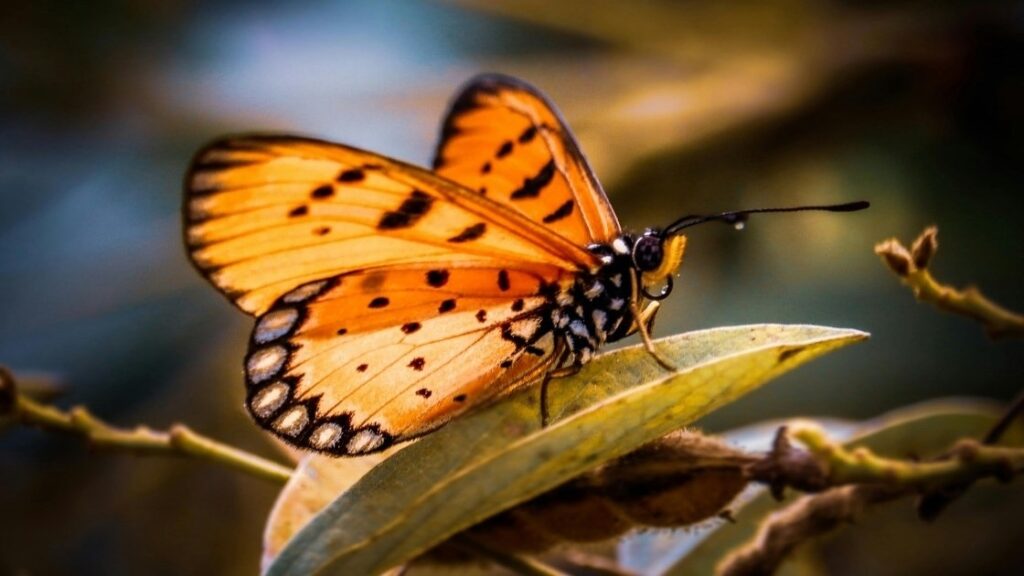
What Are These Structures Made Of?
A single wing is a paper-thin double membrane stretched across a framework of hollow tubes called veins. The membrane itself consists of chitin, the same lightweight yet durable polymer found in most insect exoskeletons.
What sets lepidopteran wings apart is their scale coverage. Both the upper and lower surfaces are carpeted with tiny, overlapping scales arranged much like shingles on a roof. According to a study published on ScienceDirect by researchers analyzing Colias crocea, a single butterfly can carry roughly 520,000 scales, with densities averaging around 312 scales per square millimeter. Some species reach even higher densities up to 600 scales per square millimeter, as documented by entomological references on Learn Butterflies.
Individual scales typically measure between 50 and 200 micrometers in length roughly the width of a single human hair. They connect to the membrane through small sockets and detach fairly easily, which actually serves as a survival adaptation. A butterfly snared in a spider web, for instance, can shed scales to wriggle free.
[Image suggestion: Scanning electron microscope close-up of wing scales Alt text: “Wing scales under microscope showing overlapping shingle-like arrangement of chitin plates”]
Quick Wing Anatomy Overview
| Wing Component | Material | Primary Role |
| Membrane | Chitin (double layer) | Structural foundation |
| Veins | Hollow tubes carrying hemolymph | Transport nutrients, provide rigidity |
| Scales (pigmented) | Chitin with melanins/pterins | Color through chemical pigment absorption |
| Scales (structural) | Chitin with nano-ridges | Iridescent color through light interference |
| Androconia | Specialized male scent scales | Pheromone dispersal during courtship |
How Do These Scales Get Their Color?
Wing color comes from two entirely different mechanisms working alone or in combination: pigment-based coloration and structural coloration. Understanding both is essential to appreciating why these insects display such an extraordinary visual range.
Pigment Colors
Pigmentary scales contain chemical compounds primarily melanins, pterins, and flavonoids that absorb certain wavelengths of light and reflect others back to the viewer’s eye. Melanins produce the blacks and browns common across many species, while uric acid derivatives and flavones generate yellows and oranges. Many of these pigments are sequestered from the plants a caterpillar eats during its larval stage, then passed into the adult’s wing scales during metamorphosis.
Subtle variation in pigment concentration can create visual illusions. The mottled green on the underside of the Orange Tip butterfly (Anthocharis cardamines), for instance, is not actually green it results from a finely balanced mixture of yellow and black scales that the human eye blends together.
Structural Colors: Scales Under the Microscope
This is where wing optics become truly extraordinary. The Blue Morpho butterfly, one of the most studied species in biophysics, contains absolutely zero blue pigment. Its brilliant, electric blue shimmer is produced entirely by nano-scale ridged structures on the surface of each scale. These ridges function as photonic crystals, selectively reflecting blue wavelengths while absorbing or scattering everything else.
The Smithsonian Science Education Center explains that the layered architecture on Morpho wings aligns reflected light waves crest-to-crest, amplifying a single color into that signature iridescent sheen. Essentially, the wing acts as an ultra-precise optical filter built entirely from biological material.
A 2024 study published in Nature Communications revealed that a protein called actin plays a direct templating role during scale development, controlling how densely reflective ridges are packed and, therefore, how vivid the structural color appears. Researchers at the University of Sheffield used super-resolution microscopy to observe actin being repeatedly reorganized at precisely the developmental moments when optical nanostructures take shape.
Some species combine both methods on a single scale a base layer of chemical pigment overlaid with structural color producing compound hues that remain nearly impossible to replicate synthetically.
[Image suggestion: Blue Morpho close-up Alt text: “Blue Morpho displaying iridescent structural coloration produced by photonic nanostructures”]
Related reading: Butterfly Wing vs Moth Wing: Key Structural Differences
The Glasswing Butterfly: Nature’s Transparent Marvel
Not all lepidopteran wings rely on color. The glasswing butterfly (Greta oto), native to Central and South American rainforests, has evolved wings that are nearly invisible achieving transparency levels that researchers have measured at over 80% across the visible spectrum, even at steep viewing angles.
How does a chitin-based structure become see-through? Research published in the Journal of Experimental Biology by Aaron Pomerantz and Nipam Patel at the Marine Biological Laboratory revealed a three-part solution. First, glasswings produce far fewer scales than opaque species. Second, the scales they do grow in transparent regions are converted into thin, hair-like bristles that allow light to pass between them. Third, the surface between these bristles is covered in irregularly arranged waxy nanopillars that act as a natural anti-glare coating.
These nanopillars prevent light from bouncing off the surface eliminating the telltale glimmer that would betray the butterfly’s position to predators. When researchers chemically removed the waxy nanopillar layer, the wings became noticeably shinier.
A separate study published in Nature Communications demonstrated that it is specifically the random height distribution of these nanopillars that produces such effective omnidirectional anti-reflection a finding now being applied to develop better anti-glare coatings for solar panels, camera lenses, and smartphone screens. Researchers at the University of Pittsburgh used machine learning to replicate this randomized nanostructure on glass, achieving 99.5% transparency.
Why Do Wing Patterns Matter?
These patterns are not random art. Every spot, stripe, eyespot, and gradient serves at least one ecological purpose hardcoded through millions of years of natural selection.
Camouflage and crypsis Leaf-mimicking species like the Indian Leaf Butterfly (Kallima inachus) blend seamlessly into forest floors when their wings are folded shut. Research published in BMC Evolutionary Biology showed that this leaf pattern evolved gradually through stepwise changes in pattern elements not in a single dramatic leap.
Predator warning (aposematism) Bright oranges and blacks on monarch butterflies signal toxicity to birds that have learned to associate those colors with an unpleasant, bitter meal derived from milkweed chemicals.
Mimicry Edible species sometimes evolve to resemble toxic ones (Batesian mimicry), while multiple toxic species converge on similar warning patterns to collectively reinforce the danger signal (Müllerian mimicry).
Mate recognition and sexual selection Ultraviolet-reflective patches invisible to the human eye help butterflies identify members of their own species during courtship. Male androconia specialized scent scales disperse pheromones whose strength helps females assess a potential mate’s age and fitness.
Thermoregulation Dark-scaled regions absorb solar heat more efficiently, helping cold-blooded butterflies reach the minimum 27°C (81°F) body temperature required for flight, as noted by entomological research documented on Wikipedia’s Butterfly page.
Wing Symmetry, Venation & Species Identification
These structures display bilateral symmetry the left side mirrors the right along the body’s central axis. This symmetry is genetically encoded and develops simultaneously in both wing imaginal discs during the pupal stage.
Entomologists use venation patterns the network of hollow tubes running through the membrane as a primary tool for species and family-level identification. Veins divide each surface into defined cells, and the arrangement of these cells follows family-specific blueprints. The “nymphalid groundplan,” first formalized by researchers in the early 20th century, maps the essential pattern elements shared across the largest butterfly family, Nymphalidae.
The relationship between venation and color patterns is tighter than it appears at first glance. Research has shown that veins act as developmental boundaries, guiding where eyespots, color bands, and symmetry systems form. Even ancestral veins that no longer appear in the adult can still influence where pattern elements develop.
Rare exceptions to symmetry do occur. Gynandromorphs individuals that are genetically male on one side and female on the other due to a fertilization error can display strikingly different patterns on their left and right sides. While exceedingly uncommon, these specimens provide valuable data about how compartments develop independently.
[Image suggestion: Labeled venation diagram Alt text: “Anatomy diagram showing labeled veins, cells, and scale regions for species identification”]
How These Structures Enable Efficient Flight
These are not just colorful surfaces they are precision-engineered aerodynamic tools. Scales create microscopic cavities that trap tiny air vortices beneath them, producing what physicists call a “roller-bearing effect.” This phenomenon allows airflow to skip smoothly over the surface with significantly reduced friction.
Research led by Dr. Amy Lang at the University of Alabama demonstrated that monarch butterflies stripped of their scales needed roughly 10% more wing flapping to maintain the same flight performance. Her laboratory experiments on scale-inspired cavity models measured skin-friction drag reductions ranging from 26% to as high as 45% at low Reynolds numbers, as reported by Physics Today.
Wing shape itself plays a critical role in flight strategy. Broader, rounder wings like those on monarchs favor long-distance soaring and gliding across thousands of kilometers during migration. Narrower, more angular ones seen on skippers prioritize rapid acceleration and tight maneuvering through dense vegetation.
Wing Shape and Flight Style Correlation
| Wing Shape | Flight Style | Example Species |
| Broad and rounded | Long-distance gliding and soaring | Monarch, Painted Lady |
| Narrow and elongated | Fast, directional flight | Skippers (Hesperiidae) |
| Tailed hindwings | Stable gliding with enhanced lift | Swallowtails (Papilionidae) |
| Reduced/transparent | Low-visibility, forest-canopy flight | Glasswing (Greta oto) |
The tail extensions found on swallowtail species have been shown in wind tunnel studies to boost lift at higher angles of attack by roughly 10–20%, improving glide stability and potentially confusing predators by creating a false “head” target at the tip.
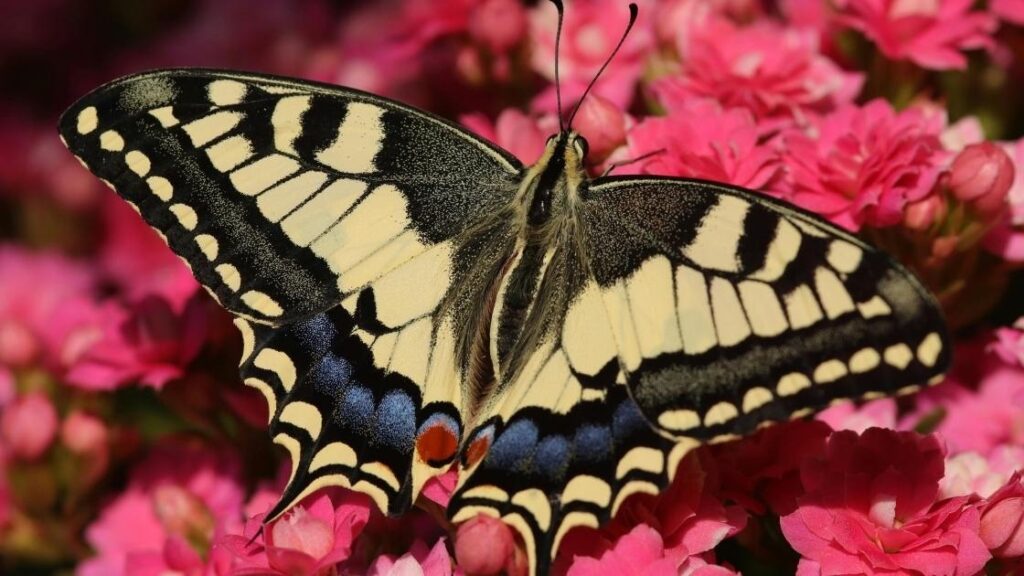
How MIT Captured Ridge Formation in Living Butterflies
A groundbreaking 2024 study from MIT captured the earliest moments of ridge formation on a developing scale something never observed in a living specimen before. The research team used quantitative phase imaging to continuously watch Painted Lady (Vanessa cardui) pupae grow over a 10-day period.
They discovered that at roughly 41% of the pupal development timeline, the scale surface transitions from flat to corrugated through a mechanical buckling process. This entire ridge-forming event unfolds in approximately five hours, as reported by MIT News. The resulting proto-ridges serve as the structural scaffolding for the final pattern of parallel ridges, which ultimately govern optical, thermal, and water-repelling properties.
The team published their results in the journal Cell Reports Physical Science, and they are now working to visualize additional stages of growth. Their long-term goal is to understand the process well enough to fabricate synthetic surfaces that replicate these multi-functional micro-architectures for textiles, building materials, and vehicle surfaces.
Bio-Inspired Engineering: What These Structures Teach Scientists
Scientists and engineers are actively replicating lepidopteran micro-architectures for real-world technology. The applications span several rapidly growing fields.
| Application Area | Inspired Innovation | Research Source |
| Drag reduction | Scale-geometry surfaces lowering underwater vehicle friction | ACS Applied Materials & Interfaces, 2024 |
| Structural color | Pigment-free paints, fabrics, and displays using photonic nanostructures | University of Sheffield, 2024 |
| Anti-glare coatings | Glasswing-inspired nanostructured glass achieving 99.5% transparency | University of Pittsburgh / Materials Horizons |
| Impact resistance | Lattice structures modeled on vein geometry for earthquake-resistant buildings | Interesting Engineering, 2025 |
| Gas and chemical sensors | Detector arrays fabricated by replicating scale architectures | PMC / Oxford University Press |
Researchers at Tohoku University in Japan, working with colleagues at Wuhan University of Technology in China, recently designed a butterfly-shaped body-centered cubic lattice that distributes stress uniformly much like a real wing does and absorbs extreme impact energy through an X-shaped deformation pathway. Their results, published in the International Journal of Mechanical Sciences in 2025, suggest the design could strengthen aircraft structures and earthquake-resistant buildings without adding significant weight.
At Shanghai Jiao Tong University, researchers replicated the scale geometry of Parantica melaneus to create superhydrophobic surfaces for underwater vehicles. Their 2024 study in ACS Applied Materials & Interfaces demonstrated meaningful drag reduction at moderate Reynolds numbers by trapping stable air layers within scale-like cavities.
Related reading: Bio-Inspired Materials: What Engineers Learn from Insects
Can These Structures Heal or Regrow After Damage?
No. Once a butterfly emerges from its chrysalis, its wings are permanently fixed structures. Torn membranes do not regenerate, and lost scales never grow back.
During the pupal stage, hemolymph (the insect equivalent of blood) is pumped through the veins to inflate and harden both layers of the membrane. After this one-time inflation event, they remain structurally unchanged for the butterfly’s entire adult life typically a few weeks to several months, depending on the species. Some species, like the mourning cloak (Nymphalis antiopa), can live up to 11 months as adults, but their wings still never repair.
Any tears, nicks, or scale loss sustained through predator encounters, wind exposure, or human handling are irreversible. This biological reality is precisely why entomologists and conservatories discourage visitors from touching or holding butterflies by their wings. Even the natural oils on human skin can strip scales and shorten a butterfly’s lifespan.
Conservation Crisis: Populations in Sharp Decline
These remarkable structures may be marvels of natural design, but the creatures carrying them are disappearing at alarming rates worldwide.
A landmark 2025 study published in the journal Science analyzed 12.6 million individual butterflies across 554 species and found that total U.S. abundance declined by 22% between 2000 and 2020 a loss equivalent to one out of every five butterflies observed two decades ago. The study represented the most comprehensive national-scale assessment ever conducted, drawing on over 76,000 surveys from 35 monitoring programs.
The findings were especially stark at the species level. According to the Xerces Society for Invertebrate Conservation, 107 individual species declined by more than 50%, and 22 species dropped by over 90%. The Southwest suffered the heaviest losses, consistent with broader research showing butterflies are disproportionately vulnerable in hotter, drier climates.
The western monarch illustrates the severity. The Xerces Society’s 2025 annual count recorded just 9,119 overwintering monarchs in California the second-lowest figure since monitoring began in 1997 and a staggering 96% drop compared to the previous year. In December 2024, the U.S. Fish and Wildlife Service proposed listing the monarch as a threatened species under the Endangered Species Act.
Primary Drivers of Decline
| Threat | Mechanism | Scale |
| Habitat loss | Conversion of natural land to agriculture and development destroys breeding and foraging areas | Global |
| Pesticide use | Neonicotinoids and other insecticides directly kill butterflies and contaminate host plants | Primarily agricultural regions |
| Climate change | Rising temperatures disrupt migration timing, shrink range boundaries, and reduce food availability | Accelerating worldwide |
Related reading: Are Butterfly Populations Declining? The 2025 Data Explained
How You Can Help Protect Butterflies
Conservation experts emphasize that individual actions genuinely matter for survival. Unlike large mammals that require vast wilderness corridors, butterflies can benefit from surprisingly small habitat patches.
Here are the highest-impact steps recommended by the Xerces Society and the National Wildlife Federation:
Plant native wildflowers that bloom across the entire growing season from early spring through late autumn to provide continuous nectar sources for adults and host plants for caterpillars.
Reduce or eliminate pesticide use in your garden. Even small residential applications of neonicotinoid-treated products can contaminate the soil and plants these insects depend on.
Leave some areas “wild” in your yard. Brush piles, leaf litter, and uncut grass strips provide critical overwintering habitat for many species.
Participate in citizen science monitoring programs like the North American Butterfly Monitoring Network or the annual Western Monarch Count to contribute data that informs conservation policy.
Cultural Symbolism and Global Meaning
Beyond their biological functions, these delicate structures carry deep symbolic weight across dozens of cultures worldwide. In many traditions, the butterfly represents transformation, rebirth, and the soul’s journey reflecting the dramatic metamorphosis from caterpillar to winged adult.
In ancient Greek, the same word psyche meant both “butterfly” and “soul.” Mesoamerican civilizations associated butterflies with the spirits of fallen warriors. In Japanese culture, a butterfly symbolizes joy and longevity, while paired butterflies represent marital bliss. Contemporary artists, tattoo designers, and fashion creators continue to draw heavily on these wing patterns as visual motifs for beauty, freedom, and change.
This cultural resonance also supports conservation: people who feel a personal or emotional connection to butterflies are more likely to take action to protect them, making the intersection of symbolism and science a valuable tool for advocacy.
Conclusion: Why These Structures Deserve Our Attention and Protection
These remarkable structures represent millions of years of evolutionary refinement self-cleaning surfaces, photonic color systems without pigment, drag-reducing microgeometries, anti-glare coatings, and thermoregulatory tools all packed onto a structure thinner than a sheet of paper. They are inspiring the next generation of advanced materials, energy-efficient vehicles, sensor technologies, and even anti-glare smartphone screens.
Yet the species carrying these extraordinary wings are vanishing faster than scientists anticipated. A 22% population decline in just two decades is not a minor fluctuation it signals a systemic ecological crisis driven by habitat loss, pesticide exposure, and climate disruption.
The encouraging news is that butterflies, unlike many larger endangered species, respond quickly to small-scale habitat improvements. Planting native wildflowers, reducing chemical use in your yard, and participating in citizen science monitoring are tangible steps that create real impact.
If this article deepened your understanding of wing science, share it with someone who cares about nature. Drop a comment below with the most fascinating fact you learned today, or tell us which species you would most like to see covered in a future guide.
What are butterfly wings made of?
They consist of two thin layers of chitin membrane supported by a network of hollow veins that transport hemolymph. Both surfaces are covered in thousands of overlapping scales, also composed of chitin, which produce color, assist with thermoregulation, and reduce aerodynamic drag during flight.
Why are they so colorful?
Wing color comes from two distinct sources: chemical pigments like melanins and pterins that absorb specific light wavelengths, and nano-scale surface structures on the scales that reflect and scatter light to create iridescent or vivid hues without any pigment. Many species use both mechanisms simultaneously.
Can butterflies fly without their scales?
Yes, butterflies can still fly after losing scales, but their efficiency drops significantly. Research from the University of Alabama found that monarchs without scales needed about 10% more flapping effort to maintain equivalent flight. Scales create tiny air pockets that reduce surface drag by trapping miniature vortices beneath them.
Do the wings grow back if damaged?
No. Adult wings are non-regenerative structures. Once a butterfly exits its chrysalis and its wings harden through hemolymph inflation, no further growth or repair occurs. Lost scales, tears, or punctures remain permanent for the entire adult lifespan.
How many scales does a single wing have?
Scale counts vary by species, but research published on ScienceDirect analyzing Colias crocea measured roughly 520,000 scales per individual with densities near 312 per square millimeter. Some species reach up to 600 per square millimeter, while others like glasswings have greatly reduced coverage for transparency.
Are butterfly populations declining worldwide?
Yes. A comprehensive 2025 study in the journal Science documented a 22% decline in total U.S. abundance across 554 species from 2000 to 2020. Habitat destruction, pesticide use, and climate change are the primary drivers. The Xerces Society recommends planting native flowers, reducing pesticide application, and protecting overwintering habitats.
Why are glasswing wings transparent?
Glasswing butterflies (Greta oto) achieve transparency by producing fewer scales, converting remaining scales into thin bristle-like structures, and coating the surface with irregularly arranged waxy nanopillars. These nanopillars act as a natural anti-glare coating that prevents light from reflecting, making the butterfly nearly invisible against any background.
How do wing patterns help with survival?
They serve five key ecological functions: camouflage to blend with surroundings, aposematic warning colors to signal toxicity, mimicry of other species, mate recognition through UV-reflective patches, and thermoregulation through solar heat absorption on dark-scaled regions.