Desert mirages trick thousands of travelers every year into believing they see shimmering lakes, distant cities, or floating objects across barren sand. As someone who has spent years researching atmospheric optics and optical illusions in arid environments, I can confirm that these heat-induced visions are not hallucinations they are measurable, photographable events rooted in the physics of light refraction and air density variation.
This comprehensive guide breaks down the science of mirage formation, classifies every major type of desert optical illusion, and explains why understanding this atmospheric phenomenon matters for navigation safety, climate science, and even autonomous vehicle development.
Table of Contents
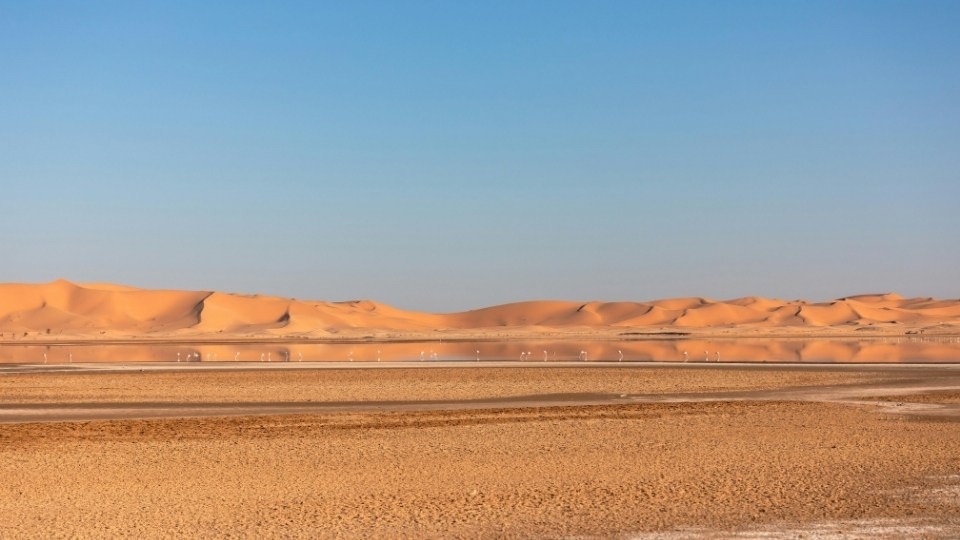
What Is a Desert Mirage? A Clear Definition
A desert mirage is a real optical phenomenon where light rays bend or refract as they pass through air layers of sharply different temperatures and densities near the Earth’s surface. According to Encyclopaedia Britannica, this bending produces a displaced or distorted image of distant objects, often resembling a reflective pool of water that does not actually exist.
Unlike a hallucination, which occurs only inside the mind, a mirage can be captured on camera. The image is genuinely present in the light reaching your eyes your brain simply misinterprets where that light originated.
This distinction matters. A mirage is an atmospheric refraction event, not a psychological episode. The shimmering you see on a scorching highway or across Saharan dunes is governed by the same physics that causes the sun to appear slightly above its true position at sunset.
How Do Desert Mirages Form? The Step-by-Step Process
Mirage formation depends on a steep temperature gradient between air layers close to the ground. Here is exactly how this heat-driven optical illusion develops:
- Solar surface heating Intense desert sunlight superheats the sand or pavement, raising ground-level temperatures far above the surrounding air.
- Air density gradient creation The heated surface warms the thin air layer directly above it. Since hot air is less dense than cool air, a sharp density difference forms vertically within just a few meters.
- Light ray curvature As explained by HowStuffWorks, photons always travel the path of shortest time. When light enters the less-dense hot layer, it speeds up and bends upward in a curved trajectory rather than following a straight line.
- Brain misinterpretation Your visual system assumes light travels in straight lines. It traces the curved rays backward and “sees” an image below the horizon typically resembling water, because water also reflects the sky.
According to Wikipedia’s physics overview of mirages, sand and tarmac can exceed the ambient air temperature by more than 10°C (18°F), which is sufficient to generate visible mirage effects.
Types of Desert Mirages Compared
Not all mirages look the same. The atmospheric conditions present determine which category of optical distortion appears. This comparison table covers every major type:
| Mirage Type | Temperature Condition | Image Position | Visual Effect | Common Locations |
| Inferior Mirage | Hot ground, cool air above | Below the real object | Fake water puddles, inverted sky reflections | Sahara, Death Valley, asphalt highways |
| Superior Mirage | Cold surface, warm air above (temperature inversion) | Above the real object | Objects appear elevated, floating, or stretched | Polar ice sheets, cold ocean surfaces |
| Fata Morgana | Multiple alternating warm and cold air layers | Stacked above horizon | Rapidly shifting towers, castles, phantom ships | Coastal deserts, Arctic, Strait of Messina |
Inferior Mirage (Most Common)
This is the classic “oasis in the desert” illusion. Light from the sky curves upward through superheated air near the ground and reaches your eyes from a low angle. Your brain interprets this as a reflective surface a lake or puddle that vanishes as you approach.
According to EBSCO Research Starters, inferior mirages are the most frequently observed type and occur reliably wherever flat, dark surfaces absorb intense solar radiation.
Superior Mirage
When a layer of cold air sits beneath warmer air a condition called temperature inversion light bends downward instead of upward. Distant objects appear higher than their true position, sometimes seeming to hover above the horizon. As noted by the University of British Columbia’s Atmospheric Science program, this looming effect can make mountain peaks visible from distances beyond the geometric horizon.
Fata Morgana: The Rarest Desert Optical Phenomenon
Named after Morgan le Fay from Arthurian legend, as Study.com explains, a Fata Morgana occurs when multiple alternating layers of warm and cold air create an atmospheric duct that traps and bends light into stacked, rapidly changing images. Ships appear to sail through the sky. Distant coastlines transform into towering castles.
According to Byju’s Physics, a Fata Morgana requires not just a thermal inversion but a steep temperature increase of at least 10°C over 100 meters to form a functional atmospheric duct.
The Atmospheric Optics Driving Every Mirage
Snell’s Law and Refractive Index Variation
Every mirage is governed by Snell’s Law of refraction the principle that light changes direction when passing between media with different refractive indexes. In the atmosphere, the refractive index of air decreases as temperature rises and density drops. This continuous gradient curves the light path rather than bending it at a single sharp angle.
Why Your Brain Is Fooled
The human visual system operates on a core assumption: light travels in straight lines. When refracted light arrives from an unusual angle, the brain projects the image along a straight-line extension of that angle placing it where no object exists. This is why desert mirages are so convincingly deceptive, and why even experienced travelers can be momentarily misled.
Real-World Desert Mirage Encounters
Mirages are not confined to textbooks. They shape real decisions in real environments:
| Location | Observed Mirage Type | Practical Impact |
| Sahara Desert | Inferior mirage (illusionary oasis) | Historical navigation errors by caravan travelers |
| Death Valley, USA | Intense inferior mirages over salt flats | Visitors frequently mistake shimmer for standing water |
| Arctic Ocean | Superior mirage and Fata Morgana | Sailors misjudge distances to icebergs and coastlines |
| Australian Outback | Highway heat haze | Drivers perceive false wet road surfaces at high speed |
| Strait of Messina, Italy | Classic Fata Morgana | Legends of floating castles and phantom cities |
According to the Federal Aviation Administration, pilots flying at low altitudes over heated terrain must account for mirage-related horizon distortion to avoid misjudging altitude and distance a real safety concern in arid and semi-arid regions worldwide.
Why Studying Desert Mirages Matters for Science and Safety
Climate Science and Atmospheric Monitoring
Mirage frequency and intensity serve as observable indicators of surface heating patterns. As global temperatures continue rising, researchers studying atmospheric optics gain valuable data about changing thermal gradients in arid and semi-arid regions. The American Meteorological Society has published research showing that even small temperature differentials of 2–4°C per meter near the surface can generate measurable mirage effects making mirages a surprisingly sensitive diagnostic tool.
Autonomous Vehicle Navigation
Self-driving car systems must distinguish real road features from heat shimmer and highway mirage effects. Understanding refraction-based optical distortion is now directly relevant to computer vision engineering and LiDAR calibration in hot environments.
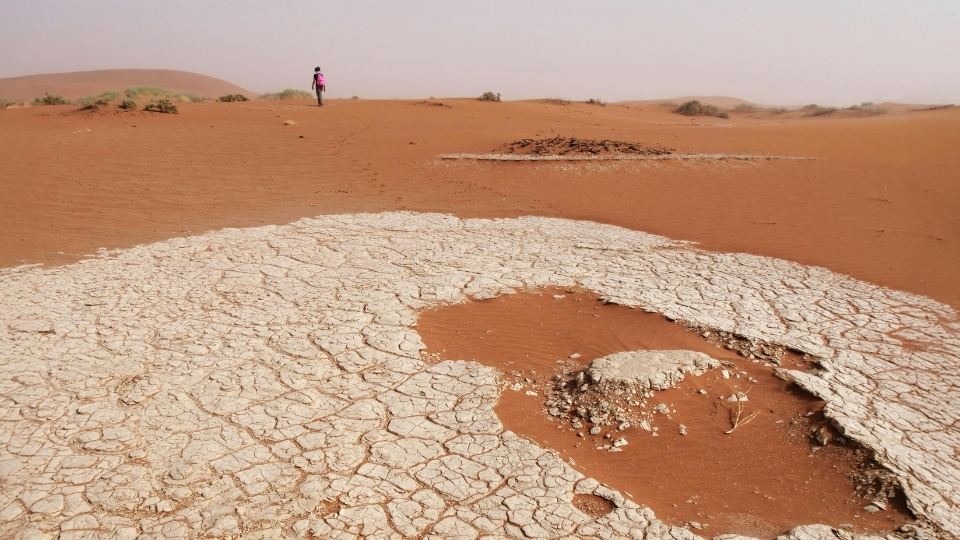
Desert Survival and Navigation Safety
For hikers, military personnel, and humanitarian workers operating in extreme heat, recognizing mirages prevents dangerous route changes toward nonexistent water sources. Misinterpreting a shimmering inferior mirage as an oasis has historically led to fatal dehydration incidents in remote desert terrain.
Desert Mirage vs. Hallucination: Key Differences
| Factor | Desert Mirage | Hallucination |
| Cause | Atmospheric light refraction | Neurological or psychological |
| Photographable | Yes it exists in the light | No occurs only in the mind |
| Seen by multiple observers | Yes, from the same vantage point | No, individual experience only |
| Predictable | Yes, based on temperature conditions | Generally unpredictable |
This distinction reinforces that mirages belong to physics, not psychology. They are atmospheric optical events with measurable, repeatable causes.
Conclusion
Desert mirages stand at the fascinating intersection of atmospheric physics, human perception, and environmental science. They are not tricks of a tired mind they are real, photographable events caused by the refraction of light through layers of air at sharply different temperatures. From the inferior mirages shimmering across Saharan sands to the eerie Fata Morgana stacking phantom towers above Arctic seas, every type of mirage follows the same foundational optical principles.
Understanding mirage formation deepens your knowledge of atmospheric optics, improves navigation safety in extreme heat, and even contributes to advancing autonomous vehicle technology. As surface temperatures continue climbing globally, these once-exotic illusions are becoming more frequent and more relevant than ever.
Have you ever been fooled by a desert mirage or highway heat shimmer? Share your experience in the comments below and if this guide helped you understand the science, pass it along to a fellow science or travel enthusiast.
Q1: Why do desert mirages look exactly like water?
When light from the blue sky bends upward through superheated air near the ground, it reaches your eyes from a low angle. Your brain assumes that light traveled in a straight line from the surface, and since water is the most common natural surface that reflects the sky, your visual system interprets the image as a pool or lake. The color and shimmer closely mimic genuine water reflections.
Q2: Can you take a photograph of a mirage?
Yes. Because a mirage is a genuine optical event caused by physical light refraction not a mental illusion any camera pointed at the same location from the same angle will capture it. This is one of the key differences between a mirage and a hallucination, which exists only inside an individual’s mind.
Q3: Do mirages only happen in deserts?
Not at all. Mirages form wherever a strong temperature gradient exists near a surface. Hot asphalt roads produce highway mirages on summer days. Cold ocean surfaces generate superior mirages in polar regions. Even airport tarmacs and flat agricultural fields can produce visible mirage effects under the right thermal conditions.
Q4: What is the difference between a Fata Morgana and a regular mirage?
A regular inferior or superior mirage produces a single displaced image. A Fata Morgana, by contrast, involves multiple alternating air layers that stack several distorted images on top of one another creating rapidly shifting shapes that can resemble floating castles, towering cliffs, or phantom ships. It requires an atmospheric duct formed by an extremely steep temperature inversion.
Q5: Are desert mirages dangerous?
They can be indirectly dangerous. Travelers in remote arid environments may change course toward what appears to be water, wasting critical energy and hydration time. Pilots flying at low altitude over heated terrain can misjudge distance and elevation due to horizon distortion. Recognizing mirage patterns is an important safety skill in extreme heat environments.
Q6: How far away does a mirage typically appear?
Most inferior mirages appear to form roughly 250 meters to several kilometers from the observer, depending on the strength of the temperature gradient and the flatness of the terrain. As you move toward the mirage, it recedes much like approaching a rainbow because the refraction conditions shift relative to your position.