Civic community service is one of the most powerful ways ordinary people can strengthen neighborhoods, build meaningful connections, and create lasting social change. Yet many people still confuse it with casual volunteering or mandatory obligations. This guide breaks down what it means, why it matters, and how you can get involved in ways that actually count.
According to data from the U.S. Census Bureau and AmeriCorps released in November 2024, over 75.7 million people in the United States formally volunteered between September 2022 and September 2023, representing 28.3% of the population aged 16 and older. That five point rebound signals renewed appetite for hands on participation in civic life.
The real question is: how do you move beyond surface level awareness and become someone who contributes meaningfully? That is exactly what this article will help you figure out.
Table of Contents
What Is Civic Community Service?
Civic community service refers to voluntary actions taken by individuals or groups to address public needs, improve shared spaces, and participate actively in the wellbeing of their community. It goes beyond donating money or showing up once a year for a charity event. It includes sustained engagement with organizations, local government, neighborhood groups, and social causes.
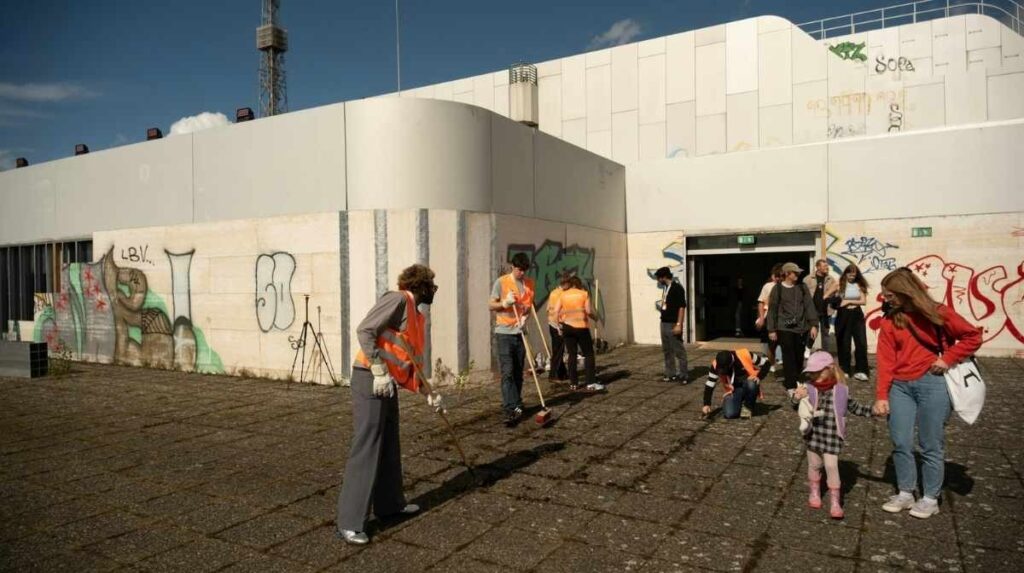
Think of it as the bridge between personal responsibility and collective progress. When someone mentors at risk youth, organizes a neighborhood cleanup, serves on a planning board, or tutors students at a community center, they are engaging in this form of active participation.
How It Differs From General Volunteering
While every act of structured service involves volunteering, not all volunteering qualifies as civic engagement. The distinction lies in intent and scope.
General volunteering might involve helping at a friend’s event or doing a one time favor. Civic oriented service is directed toward public welfare and often involves working alongside institutions, nonprofits, or government bodies. It tends to be more structured, more consistent, and more closely tied to systemic outcomes like education equity, environmental health, or public safety.
Why Active Civic Engagement Matters More Than Ever
Strong public participation acts as the foundation of democratic involvement and social trust. Without it, communities become fragmented, public institutions lose accountability, and vulnerable populations fall through the cracks.
Research from the Mental Health Foundation underscores that people with strong social networks may be less likely to experience mental ill health, and that being part of a community can help us feel happier, safer, and more fulfilled.
Beyond personal benefits, communities with higher rates of civic participation tend to have lower crime rates, better funded schools, cleaner public spaces, and more responsive local governments.
The Post Pandemic Rebound
The COVID 19 pandemic severely disrupted in person volunteering. Formal participation dropped across every demographic between 2019 and 2021. But recent data paints a hopeful picture.
According to AmeriCorps’ 2024 report, the national formal volunteering rate increased 5.1 percentage points between 2022 and 2023, a growth rate of more than 22 percent. This is the largest expansion of formal volunteering ever recorded.
The largest relative gains were among millennials, people who identified as Asian, Native Hawaiian or Pacific Islander, or Hispanic, those with less than a high school education, and people with family incomes under $25,000. This suggests the motivation to serve is expanding across socioeconomic lines.
Types of Structured Public Service
Understanding the different forms helps you choose an avenue that aligns with your skills, schedule, and passion.
Direct Service involves hands on work like serving meals at a food bank, building homes with Habitat for Humanity, or tutoring in underserved schools.
Advocacy and Policy Work includes attending town hall meetings, contacting elected officials, joining advisory boards, or campaigning for ballot measures that benefit the public.
Environmental Stewardship covers river cleanups, tree planting drives, recycling awareness campaigns, and community garden maintenance.
Mentorship and Education encompasses tutoring programs, after school youth development, career coaching, and literacy initiatives.
Virtual and Remote Service has grown rapidly. According to AmeriCorps data, 18% of Americans who volunteered in 2023 did so online. This includes remote tutoring, digital fundraising, grant writing, and social media management for community organizations.
Informal Helping is a vital but overlooked component. An estimated 54.2% of Americans helped or exchanged favors with neighbors between September 2022 and 2023. These everyday acts form the bedrock of a connected, resilient community.
Proven Benefits of Community Focused Service
The advantages of sustained participation extend far beyond a resume line.
Mental and Emotional Health
Volunteering and community involvement are consistently linked to reduced stress, lower rates of depression, and greater life satisfaction. The Mental Health Foundation notes that strong connections to people around us make us feel more satisfied and happier overall.
Serving others creates a sense of purpose difficult to replicate through passive activities. Seeing the direct impact of your effort generates a psychological reward that builds over time.
Professional and Academic Growth
For students and young professionals, community engagement builds leadership skills, expands networks, and demonstrates initiative to employers and admissions committees. Many scholarship programs now weigh civic involvement heavily.
For working professionals, serving on nonprofit boards or organizing events develops project management, public speaking, and cross cultural communication skills that translate into career advancement.
Stronger Social Bonds
Service creates shared experiences that break down social barriers. People who work side by side toward a common goal build trust and mutual respect in ways casual settings rarely achieve.
The AmeriCorps 2024 survey found that informal helping jumped 3 percentage points to 54% in 2023, suggesting structured engagement often spills over into everyday generosity.
Economic Value
The economic contribution is staggering. The 2021 Volunteering in America Report found that 60.7 million adults volunteered 4.1 billion hours, with an estimated economic value of $122.9 billion.
How to Get Involved in Civic Community Service
Getting started does not require a major time commitment or specialized skills. It starts with identifying what matters to you.
Step 1: Identify Your Passion and Availability
Ask yourself three questions. What issue do I care most about? How many hours can I realistically offer? Do I prefer working with people directly, or behind the scenes? Answering honestly prevents burnout, one of the top reasons people abandon their commitments.
Step 2: Research Local Organizations
Every city has nonprofits, schools, and government agencies that rely on volunteers. Websites like VolunteerMatch, Idealist, and your local United Way chapter maintain searchable databases of opportunities.
If you prefer something less formal, reaching out to a neighbor, joining a community garden, or attending a town council meeting all count.
Step 3: Start Small and Build Momentum
Begin with a single event or a few hours each month. As you grow more comfortable, your involvement will naturally expand. Many long term civic leaders started with nothing more than a Saturday morning cleanup.
Step 4: Bring Others Along
Service is contagious. When you involve friends, family, or coworkers, the impact multiplies and the experience becomes more enjoyable. Group participation also sustains motivation over time.
Civic Community Service for Students
Young people represent one of the fastest growing segments of civic participants. Schools, colleges, and scholarship boards increasingly recognize the value of structured service hours.
What Schools and Colleges Expect
Many high schools require a minimum number of service hours for graduation. Colleges, particularly competitive ones, view demonstrated engagement as a strong indicator of character and leadership potential. Admissions reviewers look for consistency and depth rather than one time participation.
Building a Strong Service Portfolio
Students should connect their service work with academic or career interests. A student passionate about medicine might volunteer at a free clinic. Someone interested in law could assist at a legal aid nonprofit. This alignment strengthens applications while helping young people explore career paths firsthand.
Challenges and How to Overcome Them
Despite its rewards, sustained engagement is not without obstacles.
Time constraints are the most common barrier. Look for micro volunteering opportunities requiring one to two hours per week, or explore virtual options with scheduling flexibility.
Lack of awareness stops many people before they begin. Following local nonprofits on social media and subscribing to community newsletters can help surface available opportunities.
Burnout is a real risk for those who overcommit early. Setting boundaries, rotating between activities, and celebrating small wins all help maintain long term involvement.

The Future of Civic Engagement
The trajectory is shifting in exciting directions. Virtual service, skills based volunteering, and micro commitments are opening doors for people previously excluded by geography, disability, or schedule constraints.
The World Health Organization has emphasized that community based networks empower people to thrive by reducing stigma, enhancing access, and supporting recovery and inclusion. This philosophy underlines that community driven approaches are the future of social problem solving.
As technology evolves, expect more platforms connecting willing volunteers with organizations that need them, anywhere in the world.
Conclusion
Civic community service is not a luxury reserved for people with spare time. It is an essential practice that strengthens democratic institutions, improves individual wellbeing, and builds neighborhoods where everyone has a fair shot. Whether you contribute two hours a month or twenty, the ripple effects are real and measurable.
The data is clear: more Americans are returning to service, informal helping is on the rise, and the returns of active engagement are enormous. The only question left is whether you will be part of it.
What is civic community service?
It is the practice of voluntarily contributing time, skills, or effort to improve public welfare through organized or informal activities, from serving at food banks to attending town hall meetings and mentoring youth.
How is it different from regular volunteering?
This form of engagement is specifically directed toward public good and systemic improvement, involving sustained participation with nonprofits, government bodies, or community institutions rather than one time personal favors.
What are the main benefits?
Participants typically experience better mental health, expanded social networks, stronger professional skills, and greater sense of purpose. Communities benefit through improved resources, reduced crime, and more responsive governance.
How many hours should a student complete?
Most high schools require between 20 and 100 hours for graduation. For college applications, quality and consistency matter more than raw numbers.
Can I serve my community online?
Absolutely. Virtual volunteering options include remote tutoring, graphic design for nonprofits, digital fundraising, online mentoring, and contributing to open source civic technology projects.
How do I find opportunities near me?
Start with VolunteerMatch, Idealist, or your local United Way. Social media pages of nearby nonprofits and community bulletin boards are also excellent resources.