A fire whirl ranks among the most terrifying and least understood hazards in modern wildfire science. Sometimes called a fire tornado, firenado, fire devil, or pyrotornado, this spinning column of superheated air and flame can appear without warning, shift direction in seconds, and generate destruction comparable to a weak tornado.
This guide breaks down every critical aspect of flame vortex behavior from the atmospheric chemistry that triggers formation to the survival strategies recommended by federal wildfire agencies. Every claim below is sourced from verifiable, peer-reviewed, or government-published research.
Table of Contents
What Is a Flame Vortex?
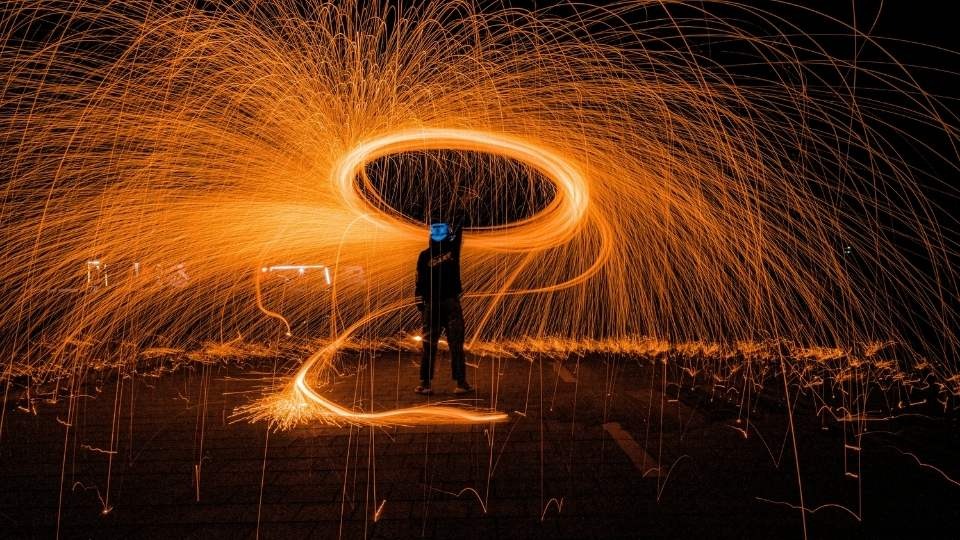
At its core, this phenomenon is a vertically rotating vortex of flame, smoke, and heated gases that rises from an active fire. It develops when a powerful thermal updraft driven by combustion intersects with horizontal or angular wind currents that introduce spin into the rising air column.
The National Wildfire Coordinating Group (NWCG) formally describes it as a spinning vortex of ascending hot air that lifts smoke, burning debris, and open flame high above the fire’s surface. Smaller versions appear regularly above brush fires and even backyard bonfires, while the largest rival the intensity of moderate tornadoes.
Research conducted at the U.S. Forest Service Missoula Fire Sciences Laboratory confirms that these rotating flame columns can measure anywhere from under one meter to approximately three kilometers in diameter, with internal wind velocities surpassing 50 meters per second in extreme cases.
Fire Whirl vs Fire Tornado: Critical Differences
Many people use the terms flame vortex and fire tornado interchangeably, but atmospheric scientists draw an important distinction between them.
A standard spinning vortex draws its rotational energy from surface-level heat and wind patterns. A true fire tornado, by contrast, connects to a pyrocumulonimbus cloud overhead a fire-generated thunderstorm and behaves much like a conventional tornado. According to atmospheric scientist Neil Lareau at the University of Nevada, Reno, whose radar observations during the 2018 Carr Fire were documented by the Library of Congress, a genuine fire tornado generates its own weather system that concentrates and sustains the rotation independently of ground-level conditions.
| Feature | Flame Vortex | Fire Tornado |
| Rotation source | Surface heat + wind shear | Pyrocumulonimbus mesocyclone |
| Cloud connection | None | Connected to fire-generated storm cloud |
| Typical duration | Seconds to minutes | Can persist 20+ minutes |
| Wind strength | Usually below EF-1 | Can reach EF-3 |
| Frequency | Relatively common near wildfires | Extremely rare |
Understanding this distinction matters for both emergency planning and accurate weather communication.
The Physics: How Combustion and Convection Build a Flame Vortex
Two interlocking physical processes give birth to every wildfire vortex: combustion chemistry and atmospheric convection.
Combustion is the exothermic chemical reaction that occurs when organic fuel wood, grass, brush, or structural material reacts with oxygen and releases heat energy, light, and gaseous byproducts. This reaction generates an intense thermal plume that pushes superheated air vertically at high speed.
Convection is the upward transport of that heated air. As the hot column rises, a low-pressure zone forms at the base, pulling cooler oxygen-rich air inward from all directions. This fresh air supply sustains and intensifies the burn, creating a self-feeding cycle of increasing heat output.
The critical transition from ordinary fire to spinning vortex happens when external wind shear, terrain channeling, or colliding air masses introduce angular momentum into this vertical column. Once rotation begins, the vortex stretches taller and narrows a principle physicists call conservation of angular momentum which accelerates the spin dramatically.
A comprehensive 2018 review in Annual Review of Fluid Mechanics by researchers Tohidi, Gollner, and Xiao confirmed that both the formation methods and internal structure of these vortices are dominated by interactions between wind geometry and heat-driven buoyancy.
Environmental Triggers and Formation Conditions
Not every wildfire produces a flame vortex. Specific atmospheric and geographic conditions must align simultaneously.
| Trigger Category | Specific Conditions |
| Fuel availability | Abundant dry vegetation, debris, or structural material |
| Atmospheric instability | Large temperature differential between ground and upper air |
| Wind shear | Winds changing speed or direction at different altitudes |
| Terrain features | Valleys, ridgelines, canyons, or urban corridors that funnel airflow |
| Low humidity | Moisture below 15–20% accelerates fuel ignition and burn rate |
| High ambient temperature | Increases thermal plume strength and convective lift |
Canyon walls and steep ridgelines are especially effective at redirecting ambient wind into circular patterns. When these rotational air currents intersect with a fire’s rising thermal column, vortex formation becomes far more likely.
Urban environments can replicate these conditions as well. Rows of tall buildings create wind corridors that behave similarly to natural canyon systems, channeling heated air into concentrated rotational pathways.
Historical Flame Vortex Disasters: A Timeline
These spinning fire columns have caused catastrophic losses throughout recorded history. Below are the most significant documented events.
1923 Great Kantō Earthquake, Tokyo, Japan: Massive urban fires following the earthquake merged into a firestorm that spawned an enormous flame vortex in the Hifukusho-ato area. The Missoula Fire Sciences Laboratory reports this single vortex killed an estimated 38,000 people in approximately 15 minutes making it the deadliest such event ever recorded.
1943 Hamburg Firestorm, Germany: Allied firebombing created conditions for multiple massive spinning vortices. Research compiled by Frontiers in Mechanical Engineering indicates the largest Hamburg vortex measured roughly 2.4 to 3 kilometers in diameter and extended 5 kilometers into the sky.
2018 Carr Fire, California, USA: A fire-generated tornado with EF-3-equivalent winds and a height exceeding 5,000 meters killed one firefighter when wind forces overturned and rolled his vehicle multiple times, as documented in peer-reviewed analysis published in the Frontiers in Mechanical Engineering journal.
2025 Deer Creek Fire, Utah, USA: A nearly stationary fire tornado rated EF-2 damaged a Bureau of Land Management fire engine, though no injuries were reported, according to incident data compiled by Wikipedia’s documentation.
How Dangerous Are Wildfire Vortices? Key Threat Factors
The danger of a wildfire vortex extends far beyond its visible flame column. Multiple cascading hazards make these spinning columns uniquely lethal.
Laboratory experiments cited by the Missoula Fire Sciences Laboratory demonstrate that combustion rates increase up to seven times when a vortex forms compared to the same fire burning without rotation. This acceleration means fuel is consumed far more rapidly and heat output spikes dramatically.
| Threat Factor | Real-World Impact |
| Extreme core temperature | Internal temperatures can reach approximately 1,090 °C (roughly 2,000 °F) |
| Ember lofting and spotting | Burning debris carried several kilometers, igniting new fires far from the original blaze |
| Sudden directional shifts | The vortex can reverse course without warning, trapping firefighters and civilians |
| Structural wind damage | Large vortices can uproot trees exceeding 15 meters in height |
| Visibility elimination | Dense smoke within and around the vortex reduces visibility to near zero |
These overlapping dangers explain why the Missoula Lab explicitly warns that all firefighters in the vicinity of a developing vortex should consider immediate evacuation.
Wind Speed, Temperature, and Size Ranges
Quantifying flame vortex characteristics helps emergency planners assess risk levels more accurately.
| Measurement | Typical Range | Extreme Documented Cases |
| Diameter | 1–50 meters | Up to ~3 kilometers (Hamburg, 1943) |
| Height | 10–50 meters | Over 5,000 meters (Carr Fire, 2018) |
| Wind speed | 10–40 m/s | Exceeding 60 m/s (EF-3 equivalent) |
| Core temperature | 800–1,090 °C | Potentially higher in fuel-rich urban fires |
| Duration | Seconds to a few minutes | Over 20 minutes for large fire tornadoes |
Data synthesized from the U.S. Forest Service, SKYbrary Aviation Safety, and NPR’s wildfire reporting.
The Blue Whirl: A Clean Combustion Breakthrough
One of the most unexpected discoveries in flame vortex research emerged from a laboratory at the University of Maryland. Scientists found that when a spinning vortex burns liquid fuel sitting on a water surface, the turbulent yellow flame can spontaneously transition into a small, stable, completely blue flame producing virtually no soot.
This phenomenon, published in the Proceedings of the National Academy of Sciences (PNAS), was named the “blue whirl.” The researchers noted that the combination of rapid mixing, intense swirl, and the water-surface boundary creates conditions for nearly soot-free hydrocarbon combustion.
The practical implications are significant. If the blue whirl state can be reliably reproduced at larger scales, it could offer new pathways for both oil-spill cleanup on open water and reduced-emission industrial burning. This remains an active area of investigation, with the discovery pointing toward potentially transformative applications in environmental remediation and clean energy research.
Flame Vortices and Climate Change: The Growing Connection
As global temperatures rise and drought conditions intensify across fire-prone regions, the atmospheric conditions that favor vortex formation are becoming more frequent.
Wildfire seasons are growing longer in North America, Australia, and the Mediterranean basin. Research published by Frontiers in Mechanical Engineering emphasizes that large-scale wildfire vortices remain poorly understood in terms of prevention and prediction, and that expanding wildfire activity increases the statistical likelihood of extreme fire-vortex events.
These vortices also contribute directly to atmospheric pollution. Each major event lofts massive quantities of carbon dioxide, black carbon soot, and fine particulate matter high into the atmosphere, where these pollutants can travel thousands of kilometers and affect regional air quality far from the original fire zone.
Firefighter Response Protocols and Safety Guidelines
The Missoula Fire Sciences Laboratory has documented multiple incidents where flame vortices forced emergency shelter deployments or caused direct injuries to wildland firefighters, including events during the 2001 Fish Fire in Nevada, the 2006 New York Peak Fire in Nevada, and the 2008 Indians Fire in California.
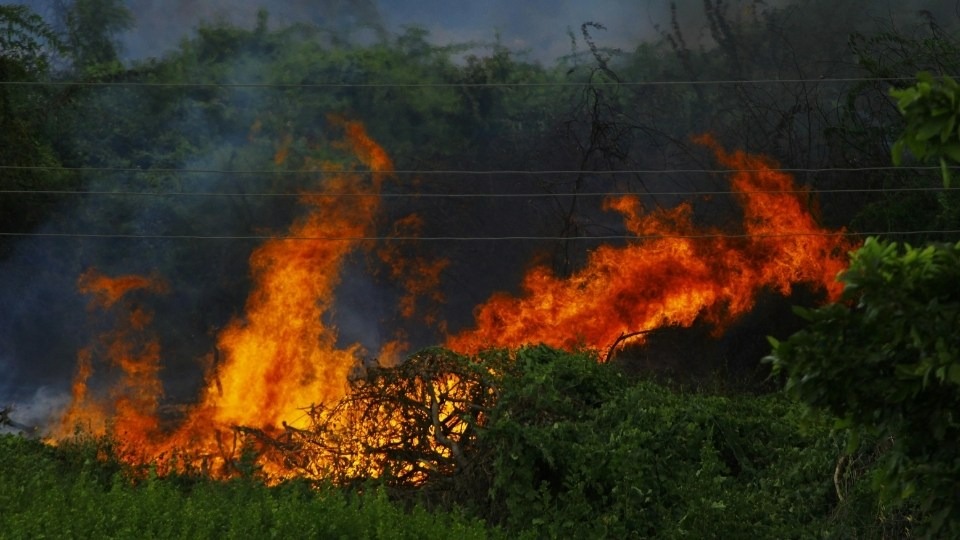
Current best-practice recommendations for fire crews include monitoring for rapid plume rotation as an early indicator, maintaining multiple escape routes at all times, immediately notifying all nearby personnel when vortex formation is suspected, and considering full withdrawal from the area depending on vortex size and proximity.
Advanced tools including satellite thermal imaging, Doppler radar analysis, and AI-driven fire behavior simulation models are steadily improving the ability of incident commanders to anticipate conditions favorable to vortex development, though reliable real-time prediction remains elusive.
How to Survive a Fire Whirl: Community Preparedness
Residents of wildfire-prone areas should understand that flame vortices can form rapidly and move unpredictably. Community preparedness steps include maintaining defensible space around structures by clearing dry vegetation, monitoring local fire weather alerts for red-flag warnings that signal extreme fire behavior potential, having a pre-planned evacuation route that avoids narrow canyons or corridors where vortex formation is more likely, and staying informed about active wildfires through official channels such as InciWeb and local emergency management agencies.
Conclusion
These spinning flame columns represent a convergence of combustion intensity, convective energy transfer, and atmospheric dynamics that can produce catastrophic results in a matter of minutes. From the devastating 1923 Tokyo firestorm to the EF-3 fire tornado during California’s 2018 Carr Fire, wildfire vortices have demonstrated their capacity to overwhelm even experienced response teams.
Ongoing research including the remarkable blue whirl discovery continues to reveal new dimensions of flame vortex behavior. As wildfire seasons grow more severe under changing climate conditions, understanding this science is no longer a niche academic pursuit. It is a public safety imperative.
Share this guide with anyone living in a fire-prone area. If you have firsthand experience with wildfire vortices or questions about fire safety, drop a comment below your insights help build a more informed and prepared community.
What causes a fire whirl to form during a wildfire?
A fire whirl develops when intense combustion heat generates a strong vertical updraft that interacts with horizontal wind shear or terrain-channeled air currents. This combination introduces rotation into the rising thermal column, creating a self-sustaining spinning vortex of flame and heated gases.
How is a fire whirl different from a regular tornado?
A standard fire whirl derives its spin from ground-level heat and wind interactions, while a true tornado connects to a rotating mesocyclone within a thunderstorm cloud. Fire tornadoes the rarest and most intense fire whirls bridge this gap by generating their own pyrocumulonimbus storm systems, as atmospheric scientist Neil Lareau documented during the 2018 Carr Fire.
What temperatures can a fire whirl reach?
Multiple sources, including the U.S. Forest Service and SKYbrary Aviation Safety, confirm that fire whirl core temperatures can reach approximately 1,090 °C, which is roughly 2,000 °F. This extreme heat far exceeds the ignition point of most structural and vegetative materials.
Can scientists predict when a fire whirl will form?
Accurate prediction remains extremely difficult. The chaotic interplay of heat output, terrain shape, wind variability, and fuel distribution creates conditions that are inherently hard to model. However, AI-powered simulation tools and real-time satellite monitoring are gradually improving early-warning capabilities.
What was the most destructive fire whirl ever recorded?
The fire whirl that formed during the 1923 Great Kantō Earthquake in Tokyo killed an estimated 38,000 people in roughly 15 minutes, according to research synthesized by the U.S. Forest Service Missoula Fire Sciences Laboratory. It remains the single deadliest fire vortex event in documented history.
What is the blue whirl and why does it matter?
The blue whirl is a recently discovered flame state in which a fire whirl transitions into a small, stable, completely blue-burning vortex that produces virtually zero soot. Published in PNAS by University of Maryland researchers, this discovery suggests potential applications in cleaner industrial combustion and emergency oil-spill remediation on water surfaces.