In today’s fast-paced business world, an automated customer service representative is becoming essential for companies aiming to improve efficiency and customer satisfaction. These intelligent systems can handle inquiries, provide instant responses, and reduce the workload on human agents, making operations smoother and more cost-effective. Businesses are increasingly adopting AI chatbots, virtual assistants, and machine learning solutions to ensure customers receive accurate support around the clock.
This article explores how automated customer service tools enhance customer experience, streamline support processes, and boost overall productivity. By understanding the benefits, challenges, and best practices, companies can make informed decisions about integrating automation into their support systems, ensuring a smarter and more responsive approach to customer care.
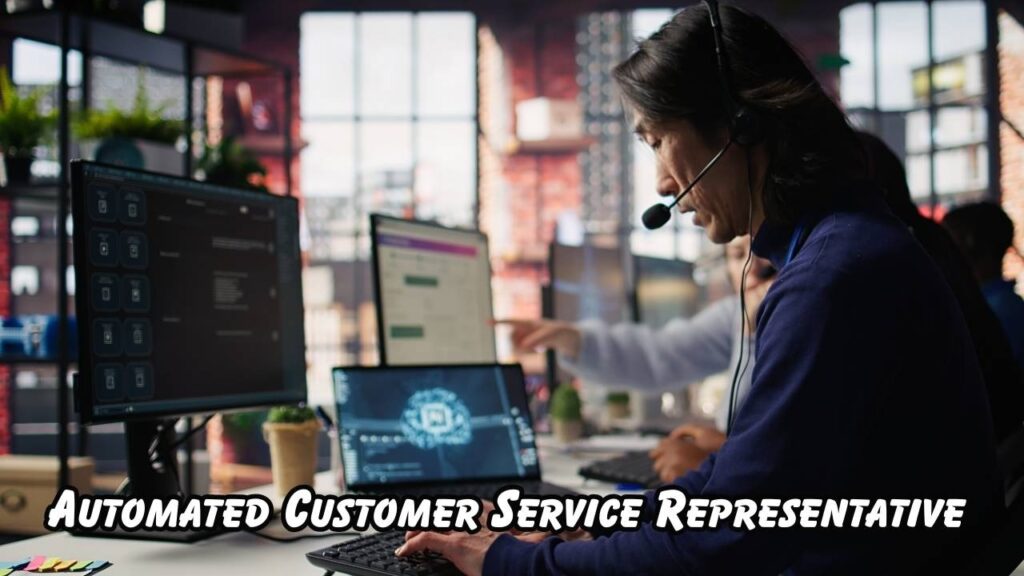
Understanding an Automated Customer Service Representative
An automated customer service representative is a software-driven system designed to manage customer interactions without direct human intervention. Leveraging AI technology, natural language processing, and machine learning, these systems can answer inquiries, resolve common issues, and provide personalized guidance. The evolution of automated customer service dates back to simple interactive voice response (IVR) systems, but modern tools have become much more sophisticated, offering real-time support, data-driven insights, and seamless integration with CRM platforms. Businesses adopt these solutions to enhance efficiency, reduce operational costs, and improve overall customer experience.
Key Features of Automated Customer Service Systems
Modern automated representatives come with a range of features that make them indispensable for businesses:
1. 24/7 Availability
These systems provide round-the-clock support, ensuring customers receive timely answers anytime, anywhere.
2. Multi-Channel Communication
They operate across chatbots, social media, email, and mobile apps, providing a consistent service experience.
3. Personalization Capabilities
By analyzing customer data, these systems can deliver tailored recommendations and responses.
4. Self-Learning Abilities
Through machine learning algorithms, automated representatives continuously improve their responses based on previous interactions.
5. Seamless Integration
They connect with existing CRM systems, helping agents access relevant data for more informed assistance.
Benefits of Using an Automated Customer Service Representative
Adopting an automated customer service representative offers several advantages for businesses: Enhanced customer satisfaction due to faster response times
- Reduced operational costs by minimizing the need for large human support teams
- Improved consistency in answers, eliminating human errors
- Valuable insights and analytics on customer behavior and queries
- Scalable support solutions that adapt to growing business demands
These benefits make automation a smart choice for companies aiming to strengthen their customer support strategy while maintaining high-quality service.
How Automated Customer Service Works
Step-by-Step Process
Automated customer service systems follow a structured process to assist users effectively:
- Customer initiates contact via chat, email, or voice channel
- System identifies the query using natural language processing
- It searches the knowledge base for accurate solutions
- Provides an instant response or escalates complex issues to a human agent
- 5 Collects feedback and stores data for future learning
This approach ensures rapid problem resolution and a seamless customer journey.
Types of Automated Customer Service Representatives
Businesses can choose from several types depending on their needs:
Chatbots
Text-based systems integrated with websites or messaging apps to provide instant replies.
Virtual Assistants
Voice-enabled AI tools capable of handling complex customer inquiries and offering personalized guidance.
Interactive Voice Response (IVR) Systems
Telephone-based systems that guide callers through predefined options and route calls efficiently.
Hybrid Models
Combining human agents with automated systems to balance efficiency and personalized service.
Challenges and Considerations
While automated customer service systems offer numerous benefits, they also come with certain limitations:
- Limited emotional intelligence, making it difficult to handle sensitive situations
- Risk of inaccurate responses if the knowledge base is outdated
- Initial implementation costs and system integration challenges
- Dependence on internet connectivity and technical infrastructure
- Customer preference for human interaction in complex cases
Understanding these challenges helps businesses design solutions that maximize efficiency while maintaining quality support.

Use Cases and Real-World Examples
Automated customer service is widely applied across industries:
- E-commerce platforms use chatbots to track orders and answer product questions
- Banks deploy virtual assistants for account inquiries and fraud alerts
- Telecom companies utilize IVR for troubleshooting and plan changes
- Healthcare providers integrate automated systems for appointment scheduling
- Travel agencies employ AI assistants to provide booking support and itinerary updates
These examples demonstrate the versatility and impact of automation in improving customer engagement and operational efficiency.
Recommendations for Businesses
To maximize the value of an automated customer service representative, businesses should:
- Regularly update knowledge bases to ensure accurate responses
- Combine automation with human agents for complex inquiries
- Monitor analytics and customer feedback for continuous improvement
- Implement multi-channel communication strategies
- Train teams to understand and optimize AI-driven systems
By following these best practices, companies can enhance customer satisfaction, reduce costs, and stay competitive in a digital-first landscape.
CONCLUSION
Implementing an automated customer service representative can significantly enhance customer experience while streamlining support processes. By offering 24/7 assistance, consistent responses, and actionable data insights, businesses can reduce operational costs and improve efficiency. While some challenges exist, such as limited emotional intelligence, integrating automation with human oversight ensures high-quality support. Overall, an automated customer service representative empowers companies to deliver faster solutions, strengthen customer satisfaction, and maintain a competitive edge in a digital-first environment
.